
Baltimore City Court Records After Arrest
After a Baltimore City arrest, booking and court case creation do not happen in the same record system. BCBIC or another DPSCS facility handles the custody intake. The Baltimore City State's Attorney's Office reviews the police and court paperwork and prosecutes criminal cases for the city. Once charges are filed, the Maryland Judiciary case record becomes the main public track for the legal side of the arrest.
The court record can show the case number, party name, charge, trial or hearing date, status, and disposition when the record is public online. The custody side remains separate. For physical custody and facility placement, use Baltimore City jail inmate records. For booking-photo questions, use Baltimore City jail mugshots. The court case should not be treated as a mugshot database or a live jail roster.
Search Baltimore City Court Records
The main public portal is Maryland Judiciary Case Search. Maryland Courts describes Case Search as the primary public way to search court case records, but it provides summary information. The complete official court file is at the clerk's office. Baltimore City criminal cases can be in District Court or Circuit Court depending on the charge type, transfer, indictment, and procedural stage.
- Search by case number when it is known. The court notice says dashes may be omitted, but the whole case number must be entered.
- When no case number is known, search by defendant last name and first name, then narrow to Baltimore City and criminal case filters where available.
- Use the percent sign for partial name searches as Maryland's notice allows, such as the first letters of a name followed by %.
- Open the case and review charge entries, court dates, bond or release entries, warrant events, and disposition.
- Verify complete files or records removed from online display with the appropriate courthouse clerk.
Automated access to Case Search can be blocked by browser or security controls. That does not mean the public portal is unavailable. It means the search is meant to be performed through the live site, and some complete or restricted records still require courthouse access.
Baltimore City Case Search Fields
Maryland court notices and FAQ materials describe the public Case Search fields and search logic. Exact names work best. Partial names require the permitted wildcard pattern. Case number is the most precise route when a citation, commissioner paperwork, attorney notice, or prior docket entry provides it.
| Field Label | Type | Required | Options or Format Notes |
|---|---|---|---|
| Case Number | Text | Optional if name searching | Dashes may be omitted, but the entire case number must be entered. |
| Last Name | Text | Optional if case number used | Exact-name search by default; partial last name can use at least one character plus %. |
| First Name | Text | Optional | First name is not required; partial first names can use characters followed by %. |
| Court or Jurisdiction Filters | Dropdowns or filters | Optional | Use Baltimore City and criminal case filters when available in the interactive portal. |
| Search | Button | n/a | The public portal runs the search through the live Case Search interface. |
Case Search may include names of parties, city and state, case number, date of birth, trial date, charge, case status, and disposition when those fields are public. Some data is removed from online access even though it may still be viewed at the courthouse.
Baltimore City Charging Documents
The arrest-to-court pathway usually moves from police custody to BCBIC intake, then into court and prosecution review. Maryland practice can involve a statement of charges, criminal complaint, information, indictment, or other charging paper depending on the offense and court. The charging document is the bridge between the arrest event and the court records that follow.
| Document | Filed By | Common Use | Why It Matters |
|---|---|---|---|
| Complaint or statement of charges | Officer, commissioner process, or prosecution path | Early criminal charges after arrest | Starts or supports the first public court case entries. |
| Information | Prosecutor | Charges filed directly by the State's Attorney | Can replace or refine earlier arrest charges. |
| Indictment | Grand jury | Serious felony or transferred matters | Can move a case into Circuit Court and change the charging set. |
The Office of the State's Attorney for Baltimore City is led by Ivan J. Bates and prosecutes city criminal cases.
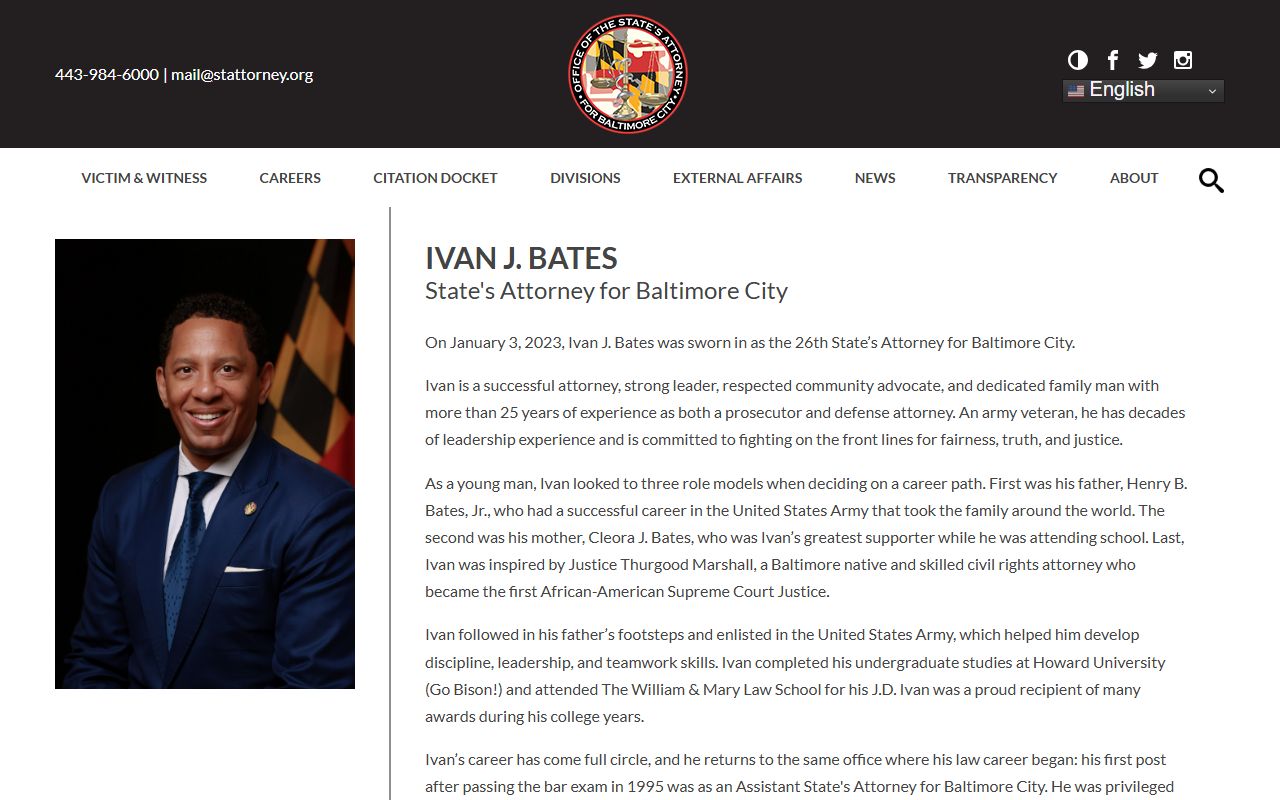
The prosecutor source is relevant because court records after a jail arrest often change once charges are reviewed, amended, dismissed, or taken to indictment.
Baltimore City Charge Status
Charges are accusations until a plea, verdict, dismissal, or other disposition resolves them. A booking charge may be broad or preliminary. A filed court charge may be narrowed, expanded, reduced, or dismissed. Read each count separately because one charge may be pending while another is dismissed or placed in a different status.
| Status | What It Means |
|---|---|
| Pending | The charge remains open and has not reached final disposition. |
| Amended or reduced | The prosecution or court record changed the charge from its earlier form. |
| Dismissed | The court case or a specific count ended without a conviction on that charge. |
| Nolle prosequi | The prosecutor declined to proceed on that charge at that time. |
| Stet | The case is placed on an inactive docket under Maryland practice, subject to later rules. |
| Guilty or convicted | A plea or verdict resulted in a conviction for that count. |
Maryland Courts warns that some criminal case information no longer appears online after outcomes such as nolle prosequi, dismissal, acquittal or not guilty, older stet entries, and certain cannabis dispositions. Courthouse records may still be the right source for complete access.
Bond After Baltimore City Arrest
Maryland uses court-set release conditions rather than one simple jail bond schedule for every charge. After a Baltimore City arrest, a person may have a first appearance or bail review, and bond can change as the case moves. Families should separate facility custody, case status, and release conditions because each piece may come from a different official source.
| Release Term | How It Works |
|---|---|
| Personal recognizance | Release based on a promise to return to court and follow conditions. |
| Unsecured bond | Money may be owed only if the person fails to comply. |
| Cash bond | Money must be posted under court or facility instructions before release. |
| Surety bond | A licensed bondsman posts bond under a commercial surety arrangement. |
| No-bond hold | The person is not eligible for release on that matter until the order changes. |
| Detainer or hold | Another agency, case, warrant, parole issue, federal matter, or immigration matter may prevent release. |
The research did not locate a BCBIC official page listing accepted bond payment methods or a cashier process. Confirm the posting location and accepted payment method with the court, commissioner, attorney, or facility before attempting to post money.
Baltimore City Arrest Warrants
No official Baltimore City active-warrant public database was found. The Baltimore Police Department arrest-warrants policy is a policy source, not a live warrant search. The Baltimore City Sheriff's Office is relevant to court processes and warrant execution, but the inspected site did not publish a public warrant lookup.
Practical warrant checks usually involve Case Search, the court clerk, the Sheriff's Office, Baltimore Police for emergency or non-emergency routing, and legal counsel when self-surrender or active warrant risk is possible. A warrant can lead directly to BCBIC booking if executed in Baltimore City, or to another jurisdiction, federal custody, or a hold if the issuing authority is elsewhere.
Baltimore City Charges vs Convictions
An arrest and a charge are not proof of guilt. Court records after a jail arrest can show accusations, case events, and final outcomes, but the meaning changes by stage. Treat each count as unresolved until the record shows a plea, verdict, dismissal, nolle prosequi, stet, or other disposition.
| Point | Charge | Conviction |
|---|---|---|
| Stage | Accusation filed in court | Final result by plea or verdict |
| Proof | Not proof of guilt | Finding or admission of guilt |
| Record effect | May be pending, amended, dismissed, or removed from online display | May carry sentence, probation, fines, or other court outcomes |
Baltimore City Sealed or Expunged Records
Maryland law provides record-clearing routes for eligible police and court records. Criminal Procedure section 10-103.1 covers expungement of police records, including photographs and fingerprints, when a person arrested or confined is released without charge under covered circumstances. Criminal Procedure section 10-105 governs petitions for expungement of eligible police and court records.
| Issue | Sealed or Restricted | Expunged |
|---|---|---|
| Public visibility | Hidden from public view or removed from online access under the governing rule | Cleared under the applicable Maryland expungement process |
| Common trigger | Juvenile/youthful status, protected case type, online-display rule, or court order | Release without charge, dismissal, acquittal, nolle prosequi, or another eligible disposition |
| Where to verify | Courthouse clerk or agency custodian | Court and police record custodians after the order or statutory process |
Note: A record missing from Case Search is not always erased; some records remain available only at the courthouse.
Restricted Court Records After Arrest
Some Baltimore City court records after an arrest are not available through a casual online search. Juvenile and youthful matters can have privacy limits. Sealed, expunged, protected, and investigatory records may be withheld. Case Search also excludes or removes certain criminal charge data from online display after specific outcomes listed by Maryland Courts.
For complete files, use the clerk's office for the court where the case is pending or was closed. For agency-held records outside the court file, the Maryland Public Information Act route may apply, subject to required and discretionary exemptions. DPSCS is the likely custodian for facility and booking records, courts are the custodian for court files, Baltimore Police may hold police reports, and the State's Attorney may hold prosecutor records subject to legal limits.
Baltimore City Record Use Limits
Public case lookups and custody checks are not the same as legally compliant background screening. Employers, landlords, lenders, insurers, and other regulated users must follow the Fair Credit Reporting Act and any state law that applies. A casual Case Search result can be incomplete, changed by later court action, or restricted from online display.
Important: Court records after an arrest should be verified with the court before relying on charge, custody, bond, or disposition details.